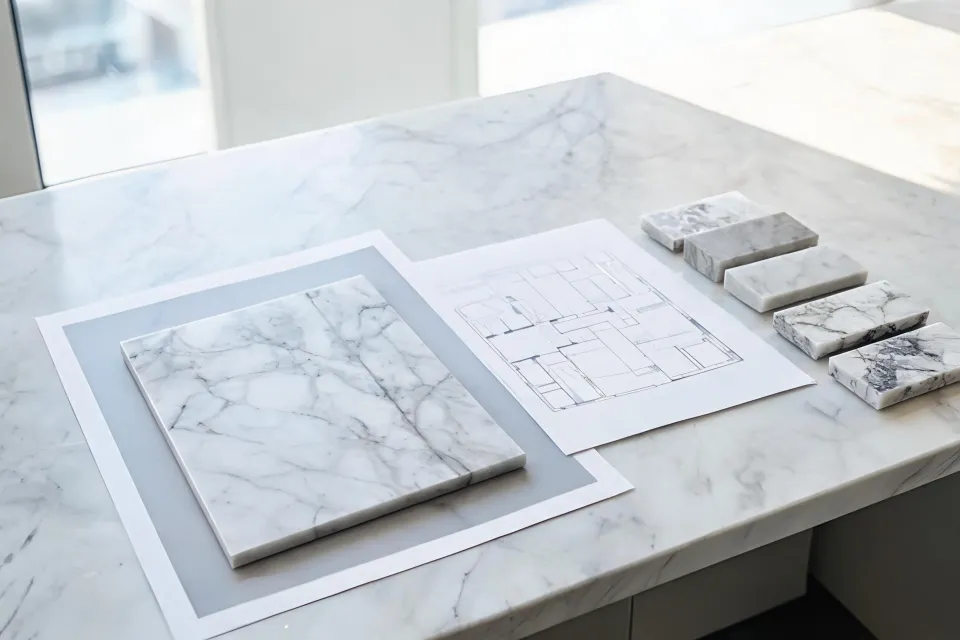
Keep each open question linked to the supplier response and the drawing revision used for the comparison.
Use a note to build the next supplier question
A useful purchase brief connects each open decision to the person who must answer it. A material name starts the discussion, while slab identity, dimensions, finish and quantity establish what the supplier is actually being asked to price. Keep project assumptions separate from confirmed supplier information.
Keep units beside quantities
Record whether an area refers to the gross slab, usable cutting face or completed installation. A piece count may include several different shapes, so link it to a drawing revision and a schedule. When the unit changes between offers, reconcile the quantity before comparing totals and leave cutting yield for the approved layout review.
Make visual approval identifiable
Marble is selected partly through appearance, but an attractive catalog image does not identify the proposed lot. Request full-face photographs with slab IDs, record the approved reference and ask how repairs or natural variation are disclosed. A sample and a drawing serve different purposes and should remain connected to the same purchase record.
Read the exclusions with the price
Factory price, fabricated piece price and delivered project cost have different boundaries. Ask which machining, edges, packing, freight and coordination charges are included. A preliminary budget can guide supplier alternatives without becoming a price claim. Before ordering, ask the responsible project team to approve installation details and confirm any outstanding product documents.
Use these notes to prepare supplier questions. Product examples do not establish availability, project approval or test compliance. Review the material comparison and send a project-specific requirement when you are ready to request factory quotes.